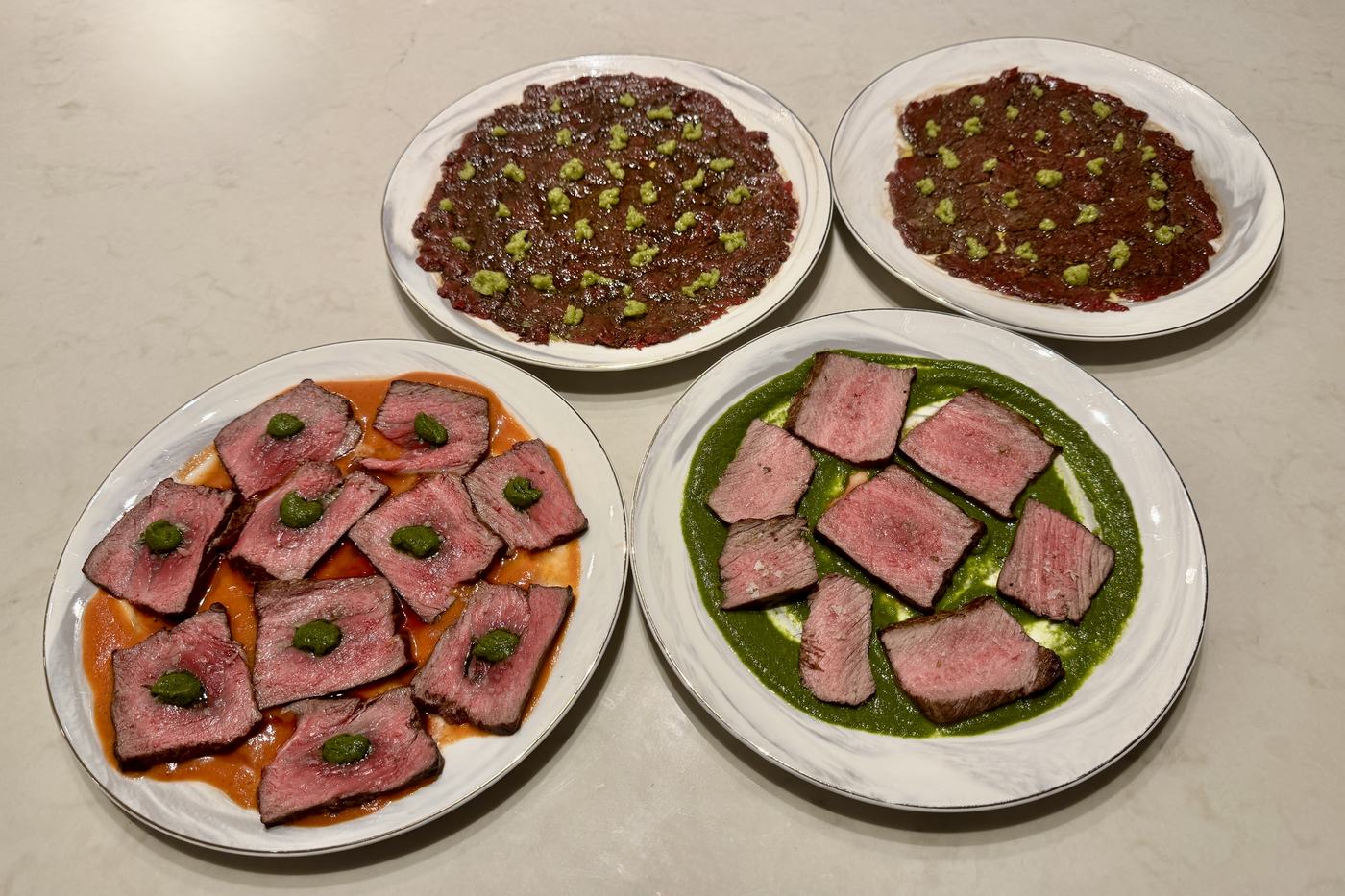
Lately I’ve been enjoying the idea of taking one ingredient and letting it go in completely different directions depending on the treatment, the acidity, the herbs and the sauce around it. These plates all started with beef, but each ended with its own distinct character.
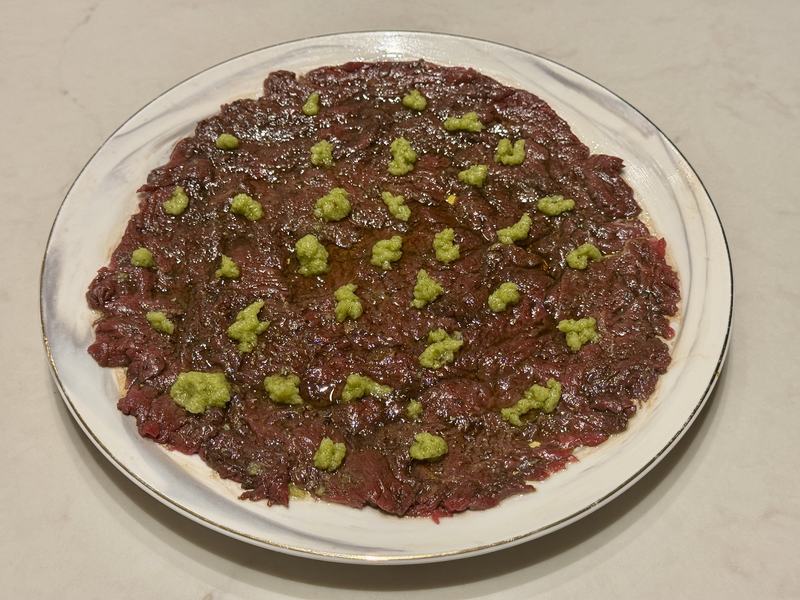
The first was filet mignon carpaccio. I sliced the meat thin and spread it across the plate, then dressed it with balsamic vinegar, lemon juice, olive oil, kosher salt and black pepper and finished it with small touches of a green lemony garlic mixture. This kind of dish depends on balance. The beef is tender and clean, so everything added to it has to sharpen and elevate rather than overwhelm. The balsamic brought a gentle depth and slight sweetness, the lemon kept it bright, the olive oil gave it softness, and the garlic added a fresh little kick. It felt delicate, but not shy.
Then I made sirloin tataki in two different styles.
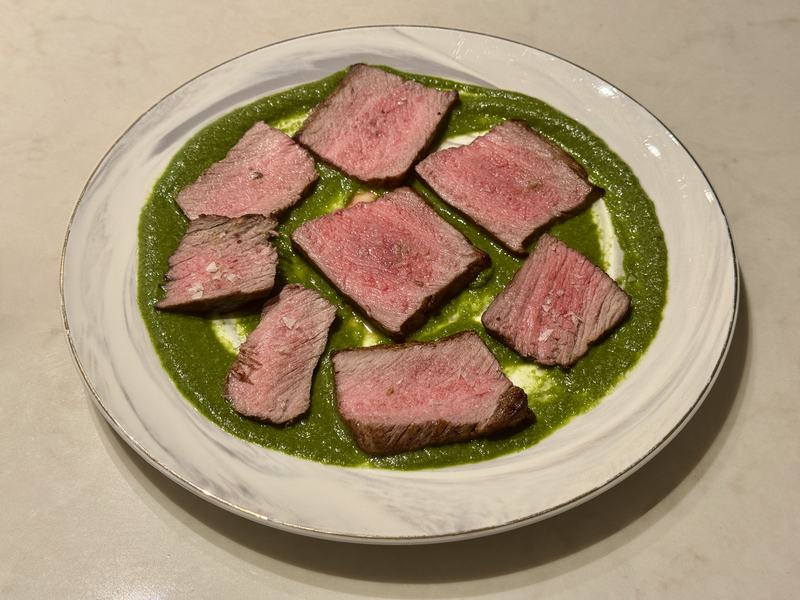
The first version was served on a vivid green spread made from parsley, cilantro, basil, dill, olive oil, garlic and lemon juice. This one felt fresh, lively and full of energy. The herb spread had real presence, not just as decoration but as a foundation for the dish. Against the lightly seared sirloin, still beautifully pink inside, it created a contrast I love: rich meat over something bright, grassy, citrusy, and full of movement.
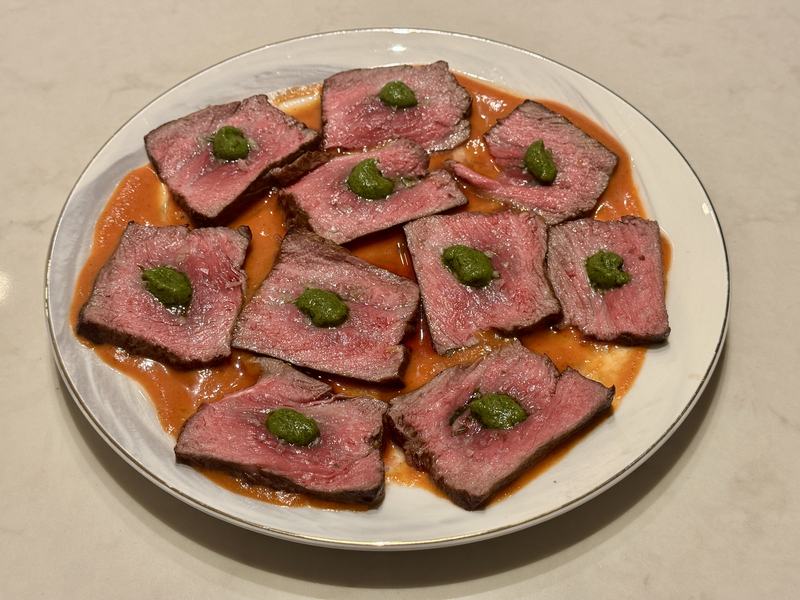
The second tataki went in a different direction altogether. For this spread, I used lime leaves, lemongrass, tomatoes, palm sugar, olive oil, ponzu, yuzu kosho and lemon juice. Compared to the herb version, this one was rounder and more layered. The tomatoes gave it body, the palm sugar softened the sharper edges and the ponzu added that salty umami depth that pulls everything together. The lime leaves and lemongrass changed the mood entirely, giving the dish a more aromatic, almost exotic profile.
What I enjoyed most in making these plates was seeing how much a sauce or spread can shape the identity of a dish. The carpaccio stayed elegant and precise, with acidity and seasoning doing the heavy lifting. One tataki became green, fresh and herb-driven. The other became deeper, more perfumed, and more complex.
Same ingredient. Different mood each time.
That is one of the pleasures of cooking at home. You do not need to make something complicated to make it memorable. Sometimes all it takes is a beautiful cut of meat, careful handling, and a clear idea of where you want each plate to go.
These were some of my favorite things I cooked recently because each one felt intentional. Not overloaded. Not fussy. Just simple elements, treated with care and allowed to speak in different voices.